When to visit Slovenia, season by season
What each season is really like, and what to pack for it.
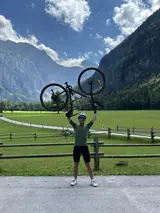
"When's the best time to come?" is the question I get most. The honest answer: it depends on what you love. Slovenia changes a lot from one season to the next, and every season has its own magic.
Spring · April to May
Everything turns green almost overnight. Rivers and waterfalls are full of snowmelt, the meadows fill with flowers, and the big sights are still calm. Days are mild, but the high mountains often keep their snow well into May, so plan for valleys rather than summits, and bring a warm layer.
Summer · June to August
Long, warm days and everything open, from mountain huts to high pastures. It's also when Bled, Bohinj and the Soča Valley are at their busiest. The trick is simple: start early, go higher, and pick the second-best lake instead of the famous one.
Autumn · September to November
My favourite, and I'm not alone. It's harvest time in the vineyards, the larches in the Alps turn gold, the Karst hills glow red, and the summer crowds are gone. In November, St Martin's Day turns the new wine into a reason to celebrate everywhere.
Winter · December to March
Quiet, cosy and underrated. Ljubljana glows with festive lights in December, the mountains get their snow, and village inns are at their warmest. Some high mountain roads, like the Vršič pass, can close because of snow, so winter days are about towns, food and short walks. In February, Ptuj hosts Kurentovanje, a carnival of shaggy, bell-ringing figures said to chase winter away. Pack a windproof jacket: on the Karst, the bora wind can be fierce.
The short version
- Here for food and wine? Come in autumn.
- Here for mountains and lakes? Early summer or September.
- Want it quiet and cheap? Spring or winter.
- Not sure? Tell me your dates, and I'll tell you what's at its best.